Which Gate Type is Best? A Guide to Choose Automatic Gates for Commercial and Industrial Properties
April 25th, 2024
Automatic gates serve as crucial components in ensuring security, controlling access, and managing traffic flow within commercial and industrial properties or premises. Property managers face the daunting task of selecting the most appropriate gate type, material, and automation system to meet the unique requirements of their premises.
In this comprehensive guide, we delve into the various options available and provide detailed insights into the description, pros, and cons of each, empowering property managers to make informed decisions.
Choosing the Right Type of Gate for Commercial Premises
1. Mesh Gates:
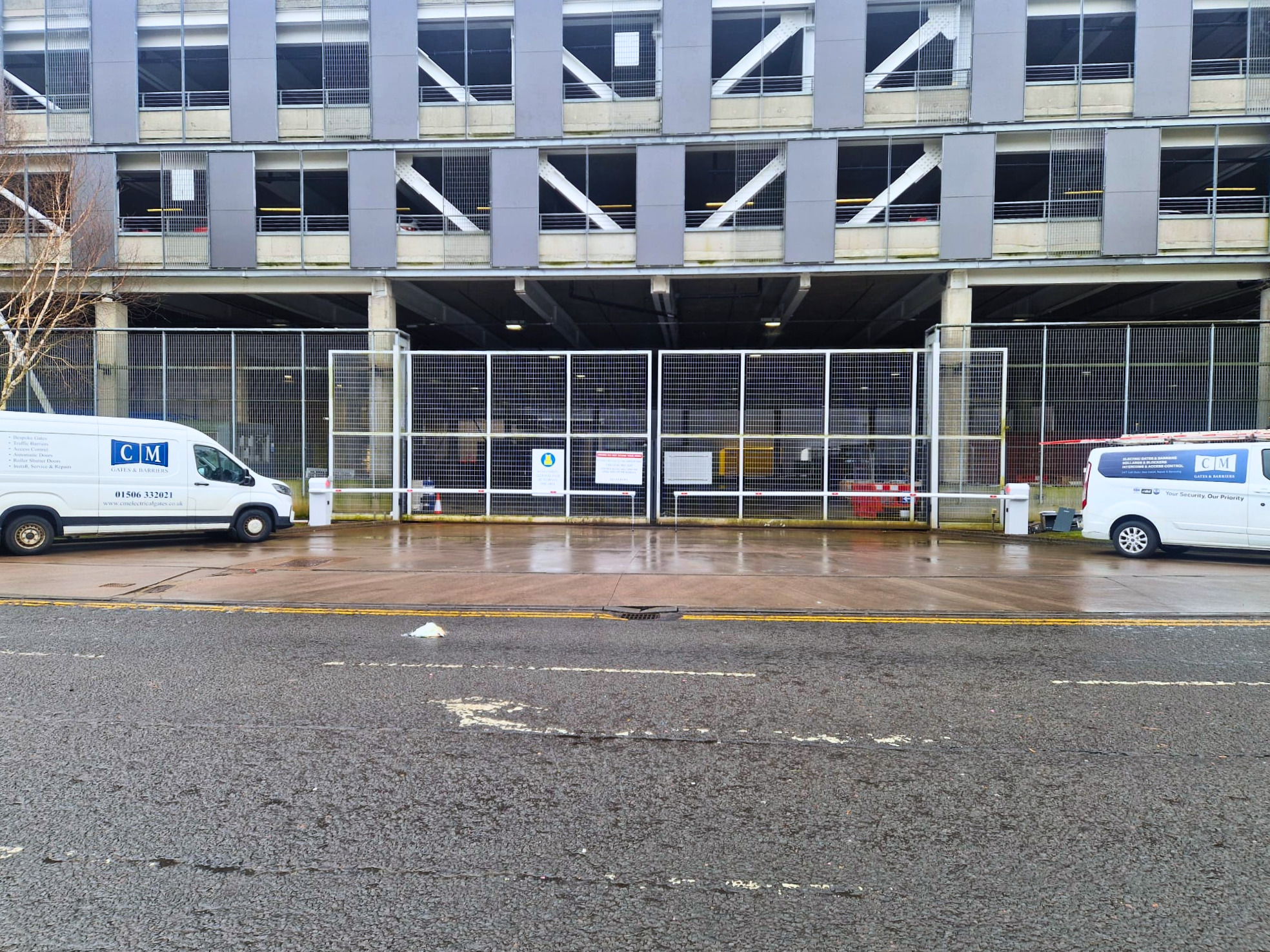
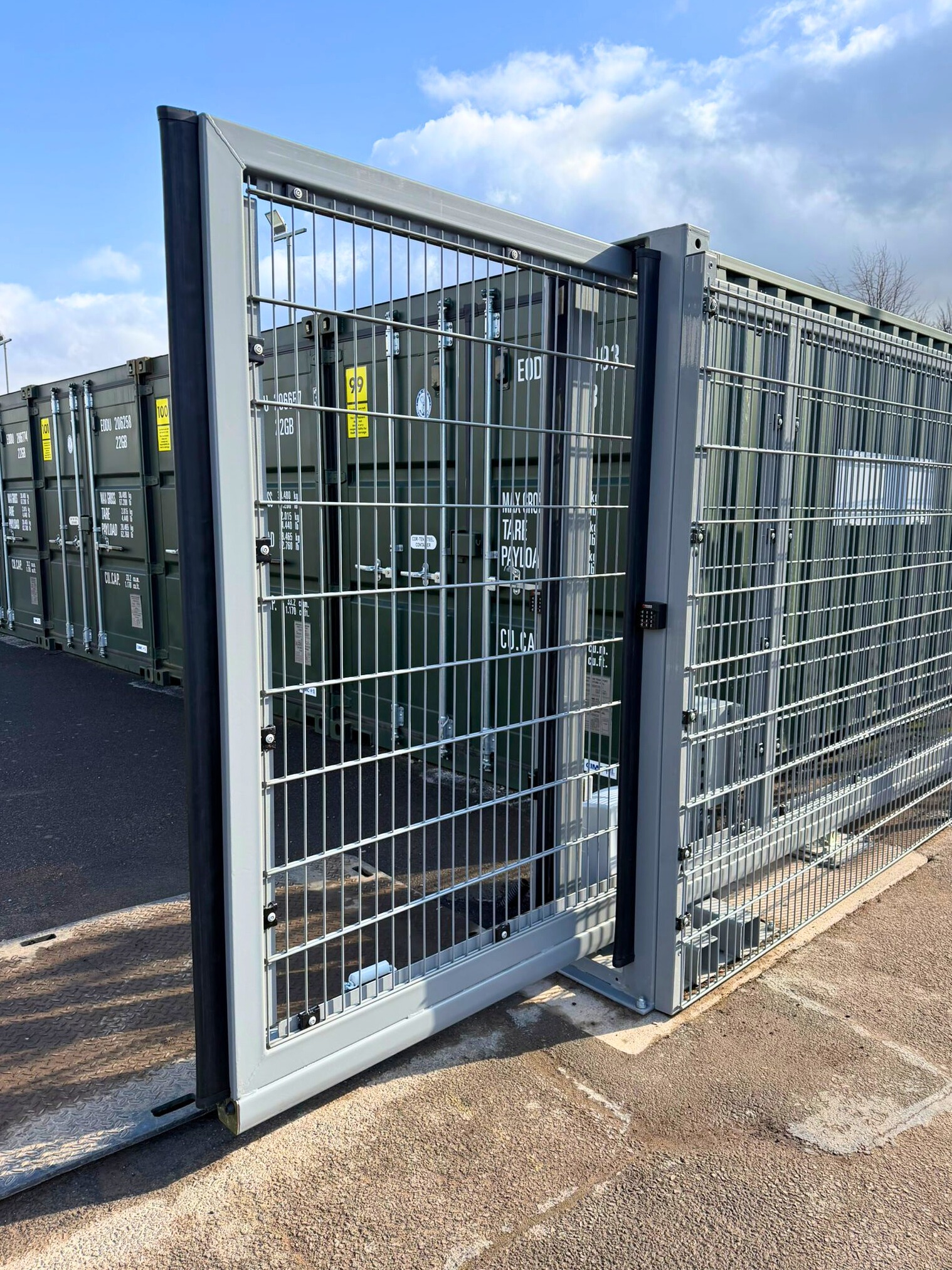
Mesh gates are constructed using welded wire mesh panels affixed to a sturdy metal frame. This design offers a balance between security and visibility, allowing for easy monitoring of activities both inside and outside the premises. Mesh gates are particularly well-suited for applications where ventilation and airflow are essential, such as parking garages or industrial facilities.
Mesh infill sliding gate by CM Gates & Barriers
Pros of Mesh Gates for Commercial Premises:
High Visibility Mesh gates provide excellent visibility, allowing for clear surveillance and monitoring.
Effective Security Despite their open design, mesh gates offer effective security by restricting access and deterring intruders.
Ventilation The open mesh design facilitates airflow, making mesh gates ideal for areas requiring adequate ventilation.
Customization Mesh gates are available in various mesh sizes, wire thicknesses, and finishes, allowing for customization to suit specific security needs and aesthetic preferences.
Cons of Mesh Gates for Commercial Premises:
Less Privacy Mesh gates may offer less privacy compared to solid gates, which could be a consideration for properties requiring heightened privacy measures.
Vulnerability to Damage Mesh gates may be susceptible to damage from heavy impact or cutting, depending on the gauge and material of the mesh.
2. Palisade Gates:
Palisade gates feature vertical steel or aluminium pales (uprights) attached to horizontal rails, forming a formidable barrier against intruders. This design offers a high level of security and deterrence, making palisade gates a popular choice for industrial and commercial properties requiring robust perimeter protection.
Palisade gates for a warehouse & office building by CM Gates & Barriers
Pros of Palisade Gates for Commercial Premises:
Excellent Security: Palisade gates provide superior security due to their imposing appearance and difficult-to-breach design, deterring potential intruders effectively.
Strength and Durability Constructed from sturdy materials such as steel or aluminium, palisade gates offer exceptional strength and durability, ensuring long-lasting security.
Customization Palisade gates come in various heights, pale designs, and finishes, allowing for customization to match specific security requirements and architectural styles.
Low Maintenance Palisade gates require minimal maintenance and are resistant to rust and corrosion, especially when galvanised or powder-coated.
Cons of Palisade Gates for Commercial Properties:
Limited Visibility Depending on the style, high palisade gates could reduce visibility compared to mesh gates, which could be a consideration for properties where clear surveillance is essential.
Higher Initial Cost Palisade gates may have a higher initial cost compared to some other gate types due to the materials and construction involved.
3. Vertical Spar Gates
A vertical steel spar gate is a robust and imposing access control solution commonly used in commercial premises to enhance security and control entry. This type of gate features vertical steel spars or bars arranged closely together to form a formidable barrier, creating a visually striking and effective deterrent against unauthorized access.
Vertical spar gates by CM Gates & Barriers
Pros of Vertical Spar Gates for Commercial Premises
Enhanced Security Vertical steel spar gates provide a high level of perimeter protection, deterring unauthorized access with their robust construction.
Customization Options These gates can be tailored to fit specific security requirements and aesthetic preferences, offering flexibility in design, height, and width. You can also customise the material to suit your needs and budget such as steel or aluminium.
Cons of Vertical Spar Gates for Commercial Premises
Limited Visibility Vertical steel spar gates may restrict visibility both into and out of the premises, potentially impacting surveillance and monitoring capabilities.
Higher Installation and Maintenance Costs Compared to some other gate types, the installation and maintenance expenses for vertical steel spar gates can be higher due to their sturdy construction and customization options.
4. Turnstiles
Full-height turnstiles are robust access control solutions designed to restrict entry to authorized personnel while deterring unauthorized access effectively. Unlike traditional waist-high turnstiles, tall turnstiles extend to a height of around 7 to 8 feet, creating a physical barrier that prevents individuals from bypassing the gate without proper authorization.
These turnstiles typically feature rotating arms or panels that allow one person to pass through at a time after presenting valid credentials such as access cards, biometric scans, or PIN codes.
Pros of Turnstiles for Commercial Premises
Enhanced Security Tall turnstiles provide a high level of security by creating a physical barrier that prevents unauthorized access. Their imposing height and sturdy construction serve as a deterrent to would-be intruders.
Single-Person Passage With their rotating arms or panels, tall turnstiles allow only one person to pass through at a time, ensuring controlled entry and minimizing the risk of tailgating or piggybacking.
Suitable for Outdoor Use Tall turnstiles are often built with durable materials such as stainless steel or galvanized steel, making them suitable for outdoor installation in various weather conditions.
Customizable Access Control These turnstiles can be integrated with various access control systems, including proximity card readers, biometric scanners, and keypad entry systems, allowing for flexible and customizable access management.
High Throughput Capacity Despite their single-person passage design, tall turnstiles can handle high volumes of pedestrian traffic, making them suitable for busy commercial premises such as stadiums, airports, and train stations.
Cons of Turnstiles for Commercial Premises
Space Requirements Tall turnstiles require sufficient space for installation, both in terms of width and height. Property managers must consider the available space and ensure proper clearance for the turnstile arms or panels to rotate freely.
Limited Accessibility The height of tall turnstiles may pose challenges for individuals with mobility impairments or those carrying bulky items such as luggage or packages. Additional accommodations may be necessary to ensure accessibility for all users.
Barrier gates consist of a horizontal bar that lifts or lowers to control vehicle access, commonly used in parking lots, toll booths, and industrial facilities. These gates offer efficient vehicle control and are ideal for properties requiring quick and reliable access management.
Automatic barrier by CM Gates & Barriers
Pros of Barriers for Commercial Premises
Efficient Vehicle Control Barrier gates provide efficient control over vehicle access, allowing for smooth traffic flow and congestion management.
Space-Saving Design Barrier gates are compact and space-saving, making them suitable for properties with limited space or narrow entryways.
Customizable Barrier gates come in various sizes and configurations, allowing for customization to match specific access control requirements.
Quick Operation Barrier gates offer rapid operation, minimising wait times for vehicles entering or exiting the premises.
Cons of Barriers for Commercial Premises:
Limited Security Barrier gates provide limited security compared to other gate types such as palisade gates or mesh gates and may require additional security measures.
Maintenance Requirements Barrier gates require regular maintenance to ensure smooth operation and prevent issues such as mechanical failures or malfunctions.
Pros of Wrought Iron Gates for Commercial Properties
Aesthetic Appeal Wrought iron gates are admired for their timeless elegance and intricate designs, adding aesthetic value to commercial and industrial properties.
Strength Wrought iron gates provide robust security and protection, deterring intruders and enhancing perimeter defence.
Customization Wrought iron gates can be custom-designed and fabricated to meet specific architectural styles and security requirements.
Cons of Wrought Iron Gates for Commercial Properties
Maintenance Wrought iron gates require regular maintenance, including painting or coating to prevent rust and corrosion, especially in humid or coastal environments.
Weight Wrought iron gates can be heavy, requiring strong support structures and mechanisms for smooth operation.
4. Vinyl/PVC Gates
Pros of Vinyl Gates for Commercial Properties:
Low Maintenance Vinyl or PVC gates require minimal maintenance, as they do not require painting, staining, or sealing and are resistant to rot, rust, and insect damage.
Longevity Vinyl gates are durable and long-lasting, retaining their appearance and functionality over time with minimal degradation.
Variety Vinyl gates are available in a variety of colours, styles, and textures to match different architectural designs and property aesthetics.
Cons of Vinyl Gates for Commercial Properties
Cost Vinyl gates may have a higher initial cost compared to some other materials, although they offer long-term savings in maintenance and replacement costs.
Limited Customisation While vinyl gates come in various designs, customization options may be more limited compared to other materials such as steel or wrought iron.
By understanding the options available and weighing the pros and cons of each, property managers can make informed decisions to enhance the security and functionality of their premises effectively.